Credit basics · 5 min read
What is a CIBIL score, and why should you care?
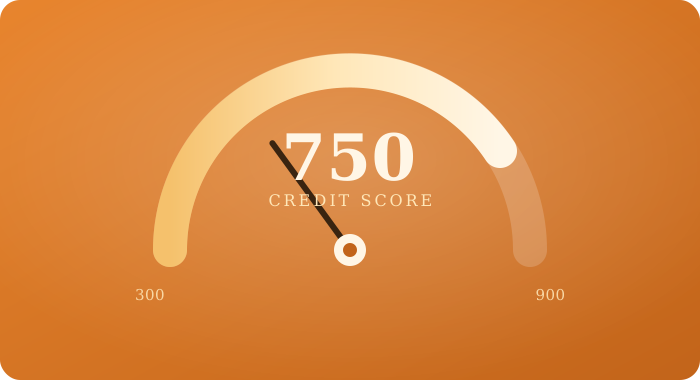
Picture this. You walk into a bank, fill out a loan form, and the officer types your PAN into a system. In 5 seconds, a 3-digit number pops up on their screen. That number — somewhere between 300 and 900 — quietly decides whether you walk out with a loan or empty-handed.
That number is your CIBIL score (or "credit score"). And here's the thing — most Indians have no idea it exists, let alone what their own score is.
So what is it, really?
Your CIBIL score is a report card on how you've handled borrowed money. Loans, credit cards, EMIs — every one of these gets logged. Pay on time? Score goes up. Miss payments? Score goes down. CIBIL (and three other bureaus — Experian, Equifax, CRIF High Mark) is the company that tracks this. The score is just a summary of that history.
What's a good score?
750 – 900Excellent — loans approved quickly, best rates
700 – 749Good — most loans get approved
650 – 699Fair — approval possible but at higher rates
Below 650Low — most banks will decline
"But Didi, I've never taken a loan…"
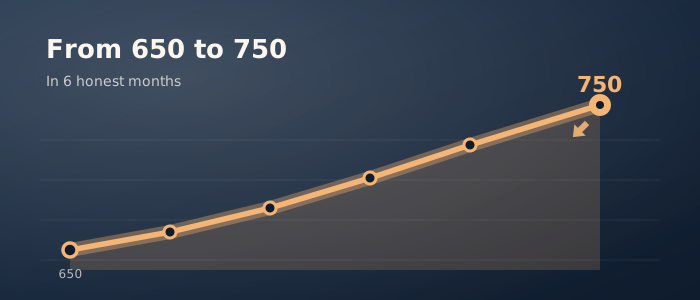
Then you're what's called a "thin-file" borrower — no history, so no score. This is where most working-class Indians get stuck. Banks won't lend to you because you have no history; but you can't build a history because no one will lend to you.
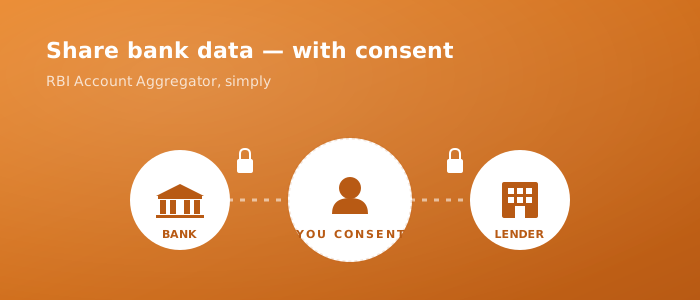
This is exactly why LoanDidi exists. We look at your real bank cashflow — UPI, transfers, salary deposits — via the RBI's Account Aggregator framework. So even with no CIBIL history, we can lend responsibly. And every loan you repay on time builds your score, opening doors to bigger products in future.
Three things you should do today
- Check your score for free. Visit cibil.com or use apps like Paytm, CRED, or even your banking app. You're entitled to one free CIBIL report every year.
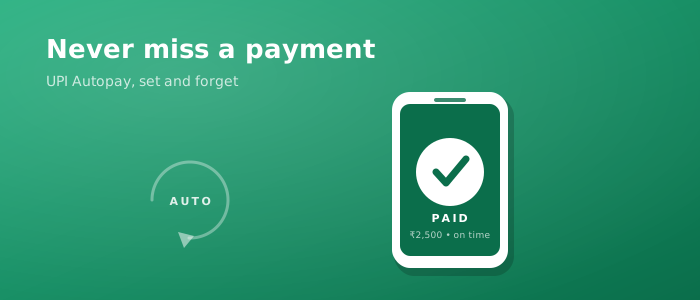
- Pay every EMI on time. Even one late payment can drop your score by 50+ points. Set up UPI Autopay for everything.
- Don't apply for too many loans at once. Each application leaves a "hard inquiry" mark. 5 applications in a week looks desperate to lenders.
"A good credit score isn't a luxury. It's the difference between paying ₹500 in interest and ₹5,000 for the same loan. It's worth the small effort." — Didi
A CIBIL score isn't a verdict on you as a person. It's just a number that captures your past habits with borrowed money. Whether you're starting from zero or rebuilding from a low score, the path forward is the same — small, on-time payments, repeated consistently.
That's how trust gets built. With money, and with everything else.